Founder guide
Our step-by-step company guide covers the machinery: regulations, manufacturers, money. This one covers the brand: the naming, positioning and label decisions that decide whether anyone cares that your product exists.
A supplement brand is a promise to a specific person, and every strong one we manufacture can finish this sentence: “for people who ___, unlike ___.” Write yours before you look at a single formula; the products that struggle are usually fine products attached to a promise nobody articulated.
Positioning also simplifies every later decision: audience determines format, format narrows the formula, and all three point the label design somewhere specific.
The workable test for a name: can the person you are for say it, spell it, and search it? Check the obvious collisions (trademarks in your category, existing supplement brands, the domain) before falling in love. A merely-good name with a clean path beats a brilliant one with a lawsuit attached.
On a crowded shelf or a search-results grid, your label is the entire first impression. It has to do two jobs at once: comply (facts panel, ingredients, business details, lawful claims) and attract. Design them together; our in-house design team builds labels alongside the compliance requirements, which is faster and safer than beautifying a non-compliant draft.
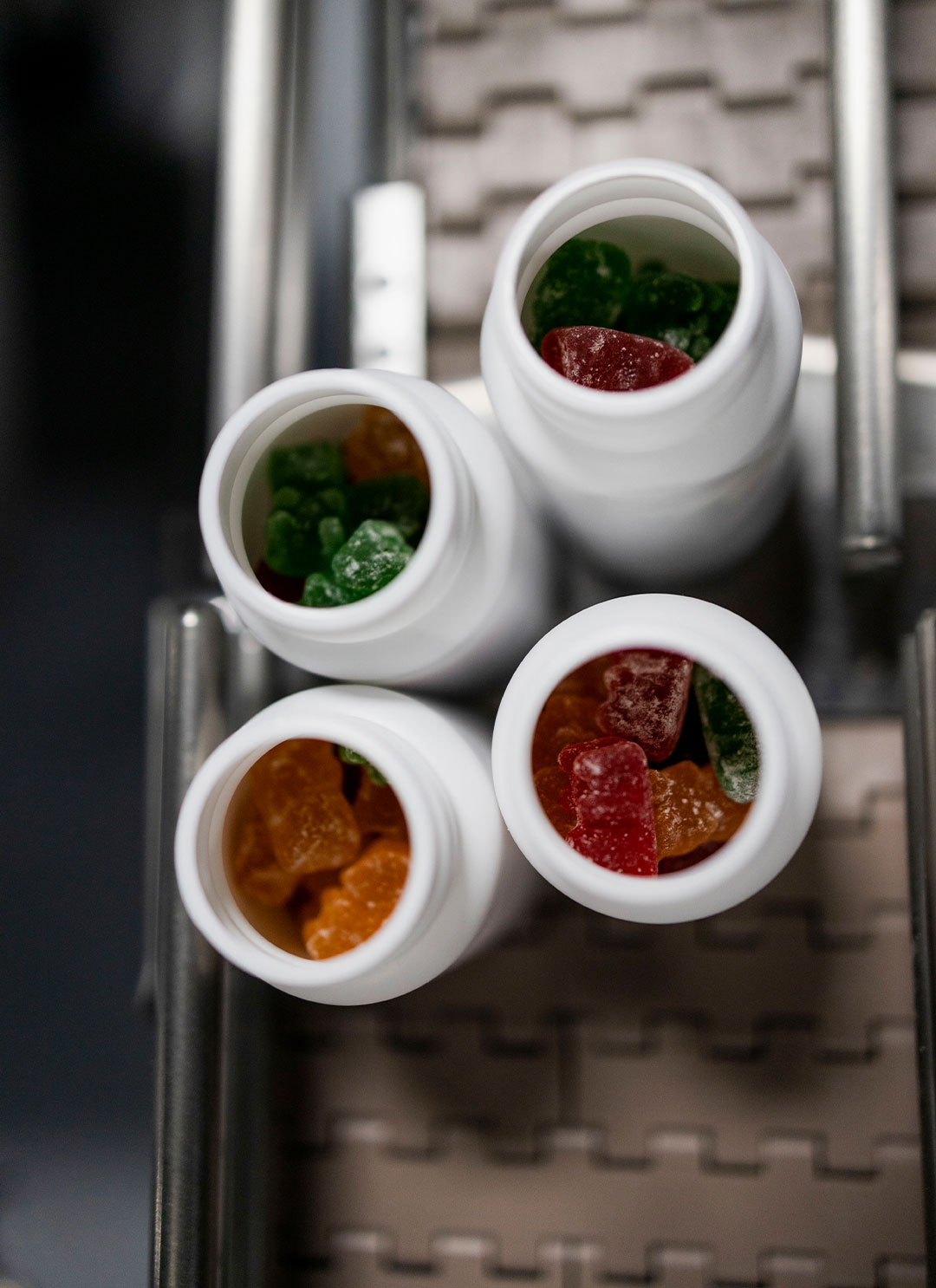
One craft note from the production floor: distinctive product formats (a custom gummy shape, an unusual color) are brand assets a customer recognizes before reading anything. See custom gummy development if that route fits your positioning.
Minimum order quantities are where brand dreams meet warehouse math. The uncomfortable truth: your first order will probably feel too big for your proof and too small for your unit economics. That is normal, and it is why first products should launch on the simplest viable version of the brand promise.
Practical moves that help: start white label to keep the formulation budget for marketing, quote several volumes to see the price breaks, and never order stock you do not have a channel plan to move.
The first production run teaches you things no plan can: what customers say back, what the return rate is, which claims resonated. Feed that into run two: a formula tweak, a label revision, a bolder position. Manufacturing with one partner keeps that loop tight; it is the quiet advantage of the co-packing model over chasing the cheapest quote each run.
Brand promise first, by a week. It makes every product decision easier. But do not let branding become procrastination: a month on fonts is a month of unsold product.
No. Strong brands launch on stock formulas constantly; the brand is the promise and the presentation, and exclusivity can come later.
The company guide covers regulations, manufacturers and money. This one covers naming, positioning and labels. Read both; they are two halves of one launch.