Co-packing explained
Co-packing, or contract packaging, is when a brand hands manufacturing and packaging to a specialist facility and keeps its energy for the parts only the brand can do: the product idea, the audience, the selling. Here is what that actually means, and how to tell if it is the right move for you.
A co-packer produces and packages goods under your brand. You own the brand, the recipe direction and the customer; the co-packer owns the equipment, the sourcing relationships, the regulatory registrations and the production floor. For supplements, that typically covers blending, forming (capsules, gummies or liquids), bottling, labeling and preparing retail-ready units.
The practical appeal is capital: a production line, a compliant facility and a quality team cost more than most young brands will earn in years. Renting that capability per production run turns a fixed cost into a variable one.
The three terms overlap and are often used loosely. Contract manufacturing usually means making your formula to your specification. Private label usually means putting your brand on a formula the manufacturer already runs. Co-packing is the umbrella over both: production plus packaging under one roof.
A useful question cuts through the vocabulary: whose formula is it, and who packages it? If the answer to both is “the factory, under my brand,” you are co-packing. We run all three models in our Cincinnati facility, so the label you use for it matters less than the outcome. If gummies are the format you are weighing up, our gummy manufacturing page covers that route in detail.
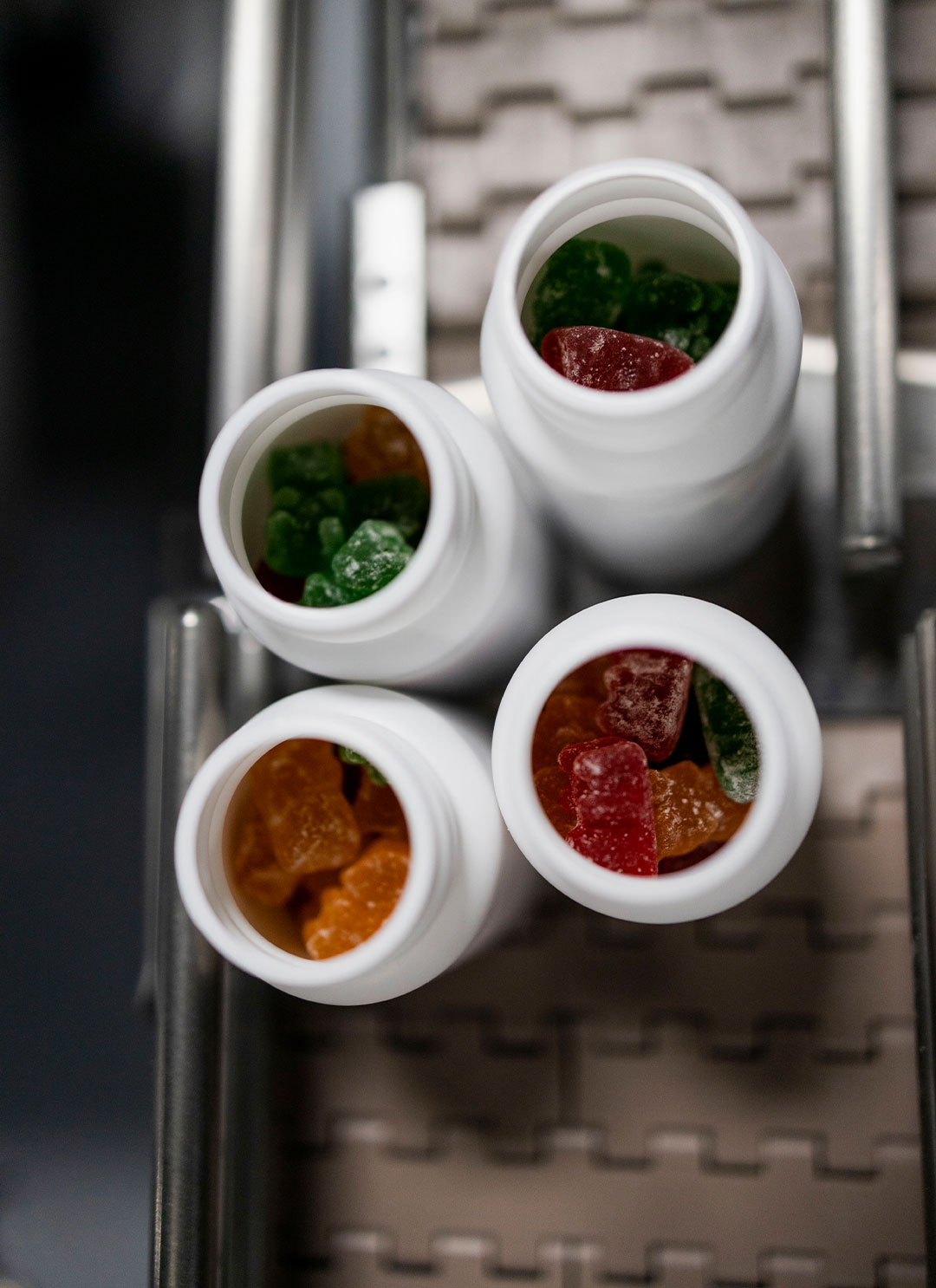
A full-service co-packer sources ingredients, blends and forms the product, runs quality checks, and packages finished units. Ours also handles the parts brands usually underestimate: label design and printing are done in-house, bottling happens in the same building, and independent labs test what comes in and what goes out.
The output is a retail-ready product, and where fulfillment is needed our partner Delivery Group connects to the major storefronts and CRMs (Shopify, WooCommerce, Amazon fulfillment and the rest), so finished stock flows straight to your channel.
First, the conversation: format, formula direction, target price and volumes. Stock formulas can move to production quickly, in some cases within 24 hours. Custom work adds a formulation and sampling stage.
Then production: ingredients arrive and are verified, the batch is blended and formed, and finished product is tested before release. Packaging follows in-house: bottles, labels, retail readiness. Finally, delivery or fulfillment, whichever your channel needs. Our facility tour shows each of these stations.
Honest answer: it depends on format, formula, ingredients and volume; anyone quoting a universal number is guessing. What we commit to is the way we quote: what we quote you is what you pay. No surprises later in the run.
Two levers matter most for price: format (gummies price differently to capsules) and order size. Tell us both and we can quote quickly.
No. It suits small brands especially well, because it converts equipment costs into per-run costs. Many of our clients started with a single product.
No. You can brand a proven stock formula, bring your own, or develop something custom with our formulator.
Bring your own formula and it stays yours. Use a stock formula and the formula remains ours, while the brand and label remain entirely yours.
In our FDA-registered facility in Cincinnati, Ohio, which is open for client visits.